The Insertion of Tailed-Anchored Proteins : Guided Entry of Tail-anchored proteins pathway(GET pathway)
개요
Tail-anchored proteins는 C-말단 근처에 단일 transmembrane α-helix를 통해 막에 고정된 중요한 cytosolic face membrane protein군이다. 이들은 SRP-의존적 경로를 사용할 수 없어, 특수화된 post-translational membrane insertion mechanism을 사용한다.
Tail-Anchored Proteins의 특징
구조적 특성
- C-말단 매우 가까이에 단일 transmembrane α-helix 보유
- 대부분의 단백질이 cytosolic face에 위치
- Transmembrane segment는 hydrophobic α-helix 구조
기능적 중요성
많은 중요한 단백질들이 이 범주에 속함:
- 다수의 SNARE Proteins protein subunit (vesicular transport 조절)
- 기타 cytosolic face membrane protein들
SRP-의존적 경로를 사용할 수 없는 이유
근본적인 문제
- Tail-anchored protein이 번역될 때
- Ribosome이 termination codon에 도달하는 시점에
- Transmembrane α-helix가 되어야 할 polypeptide sequence가 여전히 ribosome exit tunnel 내부에 존재
- SRP가 이를 인식할 수 없음
결과
- 단백질이 ribosome에서 cytosol로 방출됨
- 대체 경로가 필요
Tail-Anchored Proteins의 막 삽입 메커니즘
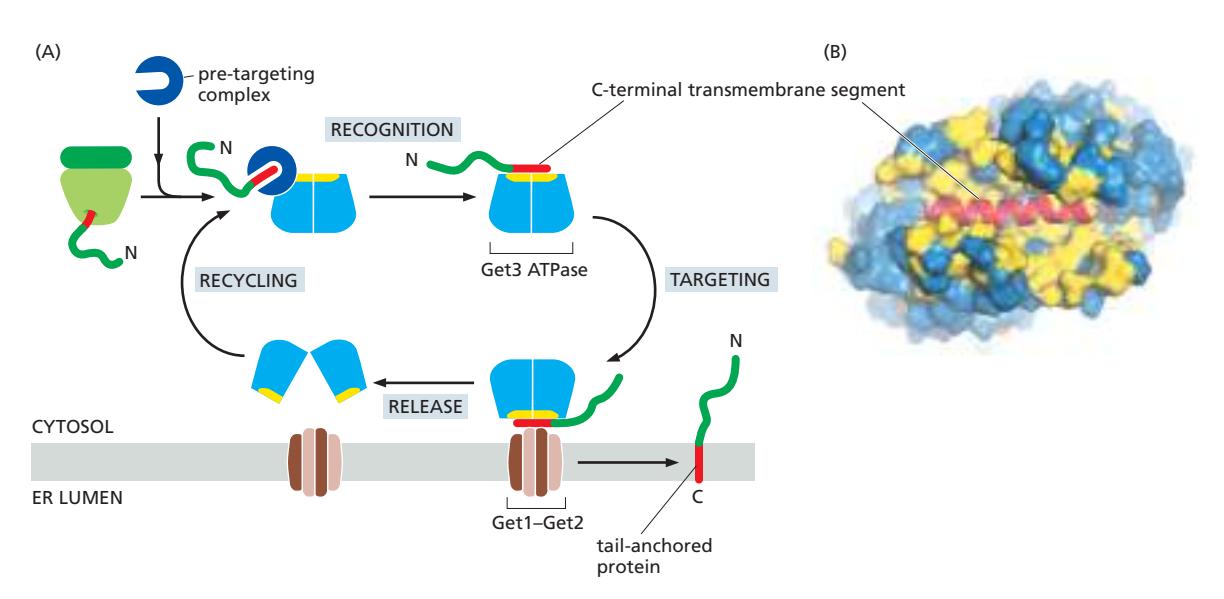
0단계: 번역 완료 & C-말단 노출
1단계: Cytosol에서의 Chaperone 인식
Specialized chaperone complex=pre-targeting complex
- Hydrophobic segment가 ribosome에서 나온 후 즉시 인식
- 단백질이 aggregation되거나 misfolding되는 것을 방지
- Get3 targeting factor로 전달
2단계: Get3에 의한 인식 및 결합
Get3의 구조와 기능:
- Get3는 SRP와 structurally unrelated
- Hydrophobic pocket을 포함:
- 많은 methionine side chain으로 구성
- 유연한 unbranched side chain을 가진 methionine의 특성 활용
- 다양한 크기와 형태의 hydrophobic segment를 인식할 수 있음
Methionine 기반 인식의 장점:
- Methionine의 unbranched side chain이 plasticity 제공
- 정확한 sequence에 무관하게 다양한 hydrophobic segment 수용
- SRP의 methionine 기반 signal sequence 인식과 유사한 원리
3단계: ER 막으로의 Targeting
Get1-Get2 receptor complex:
- ER 막에 위치한 2개 단백질 (Get1과 Get2)로 구성
- 두 가지 기능 수행:
- Receptor 역할: Get3의 receptor로 작용
- Translocator 역할: Tail-anchored protein의 hydrophobic segment를 lipid bilayer에 insertion
4단계: 막 삽입 및 재활용
Insertion 과정:
- Get3-cargo complex가 Get1-Get2와 결합, 이 때 ATP hydrolysis energy로 Get3가 TA protein을 넘겨줌.
- Get1-Get2가 hydrophobic segment를 막에 삽입
- Tail-anchored protein이 ER 막에 고정
- Get3가 방출되어 cytosol로 재활용. ADP 해리되고 ATP가 다시 결합함.
결과
TMS는 ER 막 이중층에 삽입되고, 단백질의 N-말단은 세포질 쪽에 위치.
SRP-의존적 경로와의 비교
유사점
- 개념적 유사성:
- Cytosol에서 cargo 인식
- Targeting factor (SRP 또는 Get3)가 cargo와 결합
- Membrane receptor와의 상호작용
- Membrane translocator를 통한 insertion
- Targeting factor의 재활용
차이점
| 특성 | SRP 경로 | Get3 경로 |
|---|---|---|
| Timing | Co-translational | Post-translational |
| 인식 시점 | Ribosome에서 signal 나타날 때 | Translation 완료 후 cytosol에서 |
| Cargo 상태 | 번역 중인 polypeptide | 완성된 polypeptide |
| Receptor/Translocator | SRP receptor + Sec61 | Get1-Get2 (통합 기능) |
| 에너지 | GTP hydrolysis | ATP hydrolysis |
에너지 사용
Get3의 ATP Cycle
- Get3와 SRP 모두 nucleoside triphosphate를 결합하고 가수분해
- Get3: ATP 사용
- SRP: GTP 사용
- Hydrolysis가 targeting cycle에 directionality 부여
다른 Organelle로의 Targeting
Tail-Anchored Proteins의 분포
일부 tail-anchored protein은 ER 대신 다른 위치로 targeting됨:
Targeting 메커니즘
- 이들 organelle로의 targeting mechanism은 아직 알려지지 않음
- 다른 targeting factor와 receptor가 관여할 것으로 추정
기타 응용
- 다양한 cytosolic face membrane protein에 사용
- 단백질의 대부분이 cytosol에서 기능하지만 membrane anchorage 필요
관련 개념
- Transmembrane Protein Insertion
- Post-translational Translocation
- SNARE Proteins
- 003_Vesicular Transport
- Protein Targeting
- Sec61 complex (비교 대상)
요약
Tail-anchored protein은 C-말단 근처의 transmembrane segment 때문에 SRP-의존적 경로를 사용할 수 없다. 대신, cytosolic chaperone complex가 hydrophobic segment를 인식하고 Get3 targeting factor로 전달한다. Get3는 methionine이 풍부한 hydrophobic pocket을 사용하여 다양한 hydrophobic segment를 인식하며, ER 막의 Get1-Get2 complex가 receptor이자 translocator로 작용한다. 이 post-translational mechanism은 SRP-의존적 경로와 개념적으로 유사하지만, SNARE protein을 포함한 중요한 tail-anchored protein들의 적절한 membrane insertion을 가능하게 한다.