Sec61 complex
단백질 translocation의 핵심 translocator로, bacteria에서 eukaryotic cell까지 고도로 보존되어 있다.
구조
기본 구성
- 3개의 subunit로 구성
- 10개의 α helix가 중앙 channel을 둘러싸고 있음
- Bacteria에서 eukaryotic cell까지 고도로 보존됨
Figure 12-22 Structure of the Sec61 translocator.
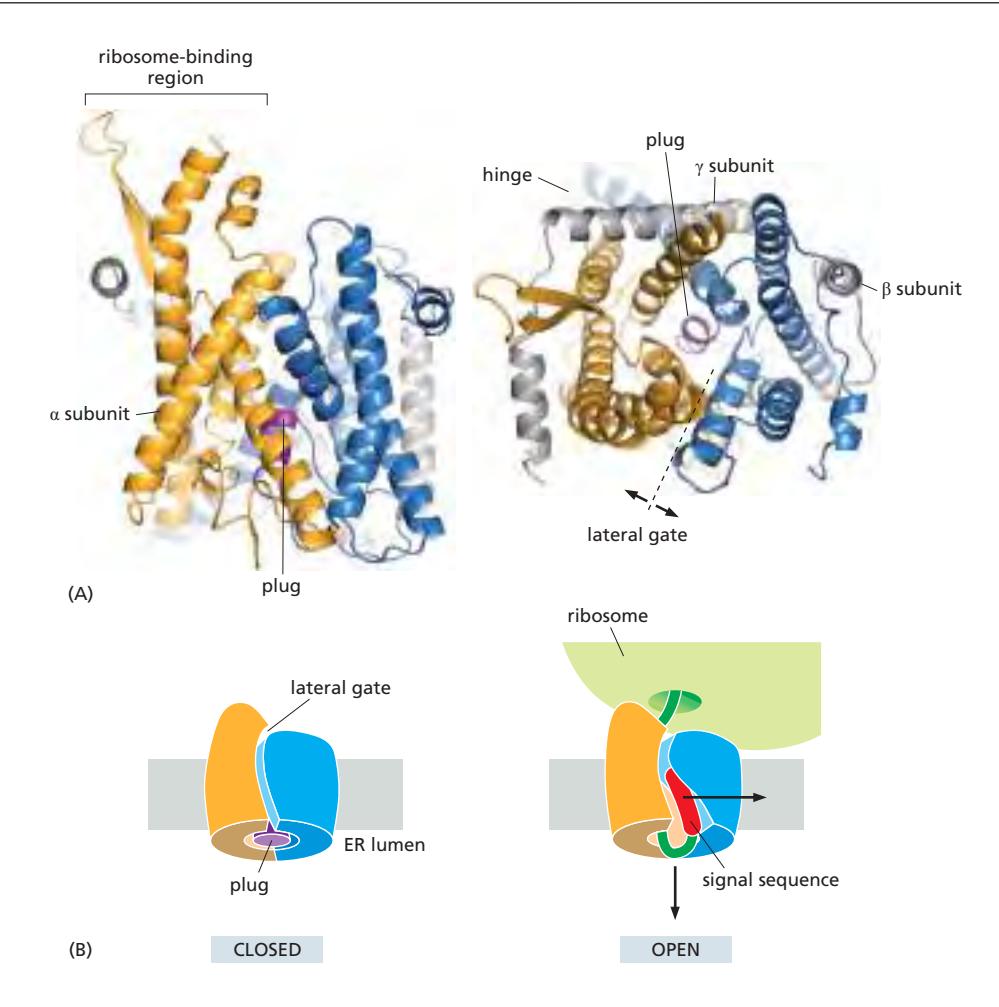
*Figure 12-22A: Archaeon Methanococcus jannaschii의 Sec61 translocator 구조(SecY translocator). Sec61 α subunit는 inverted repeat 구조를 가지며 파란색과 주황색으로 pseudosymmetry를 나타낸다. 두 개의 작은 β와 γ subunit는 회색으로 표시된다.
- Sec61 α subunit의 일부 영역은 cytosol로 돌출되어 단백질 translocation 중에 ribosome에 결합한다.
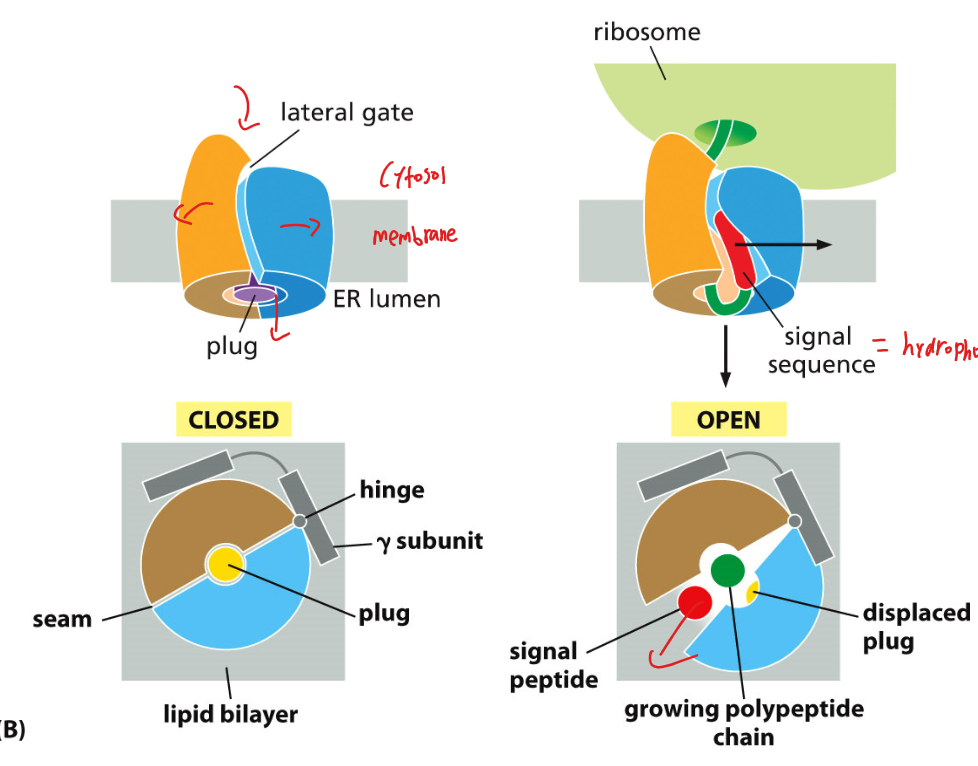
- 보라색 짧은 helix는 translocator가 닫혀 있을 때 pore를 막는 plug를 형성한다. Translocator가 열릴 때 plug helix가 밖으로 이동한다.*
Channel과 plug
Channel은 translocator가 유휴 상태일 때 유지하는 짧은 α helix에 의해 막혀 있다. Endoplasmic Reticulum에서 Ca2+와 같은 이온이 누출되는 것을 방지하기 위해 channel을 닫아두는 것이 중요하다. Translocation 중에 plug가 밖으로 이동하여 polypeptide가 channel을 통과할 수 있다. 위 이미지는 signal sequence가 SRP에서부터 translocator인 Sec61로 넘겨진 후. Figure 12-22B: Sec61/SecY translocator의 닫힌 상태와 기능적으로 활성인 상태의 모델. 활성 상태에서 단백질 chain은 translocator의 중앙 channel을 통해 membrane을 가로질러 translocation하거나 lateral gate를 통해 lipid bilayer로 sideways로 이동할 수 있다.
Lateral gate
Sec61/SecY translocator는 lateral gate라 불리는 membrane을 향한 측면 개구부도 가질 수 있다. 활성 상태에서 단백질 chain은 translocator의 중앙 channel을 통해 membrane을 가로질러 이동하거나 lateral gate를 통해 lipid bilayer로 측면 이동할 수 있다.
Flexibility
central channel을 통한 translocation과 lateral gate를 통한 이동으로 translocation과 integeration(embedding protein into the membrane)을 선택적으로 다룰 수 있다.
Signal sequence 인식
Proofreading 기능
Sec61 complex는 signal sequence를 포함하는 단백질에 대해서만 열린다. Signal sequence를 인식하는 Sec61 translocator의 능력은 Endoplasmic Reticulum을 위해 진정으로 의도된 단백질만 들어갈 수 있도록 하는 proofreading 단계를 제공한다.
Signal sequence 결합
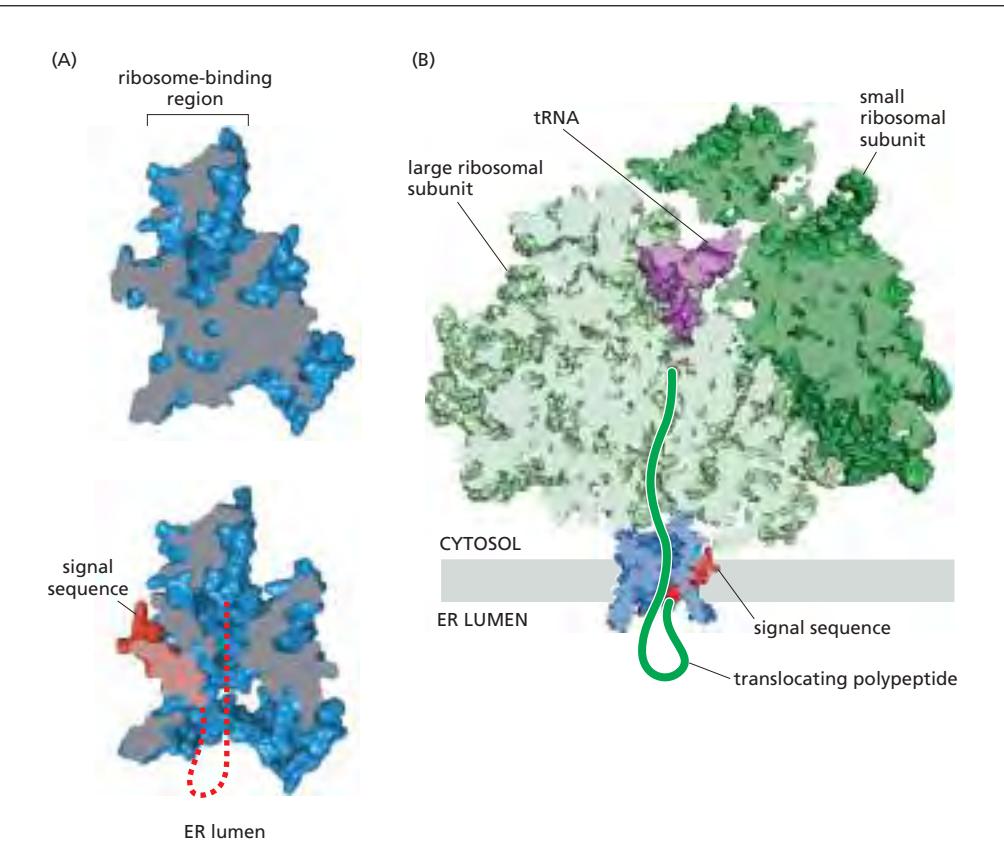
Figure 12-23A: Signal sequence가 Sec61 translocator를 여는 과정. Signal sequence가 lateral gate에 삽입되기 전후의 Sec61 translocator 단면. Signal sequence 삽입으로 translocator의 중앙 channel이 넓어지고 plug가 이 channel에서 밖으로 이동한다. 따라서 이제 membrane을 가로지르는 연속적인 경로가 명확해진다(점선).
Cryo-electron microscopy 구조는 signal sequence가 N-terminus가 cytosol을 향하도록 Sec61 complex의 lateral gate 또는 seam에 wedge되는 것을 보여준다. Lateral gate에서 signal sequence의 삽입은 중앙 channel을 넓히고 plug를 방출한다.
Polypeptide 수용
Open translocator는 signal sequence를 따르는 polypeptide의 segment를 channel 내부에 쉽게 수용한다. Hydrophobic한 signal sequence는 membrane에서 절단되고 빠르게 분해되기 전에 lateral gate를 통해 측면으로 membrane으로 빠져나간다.
Ribosome과의 상호작용
Figure 12-23B: Signal sequence에 의해 열린 Sec61 translocator에 결합된 translating ribosome의 단면. Ribosome(녹색)이 Sec61 translocator(파란색)에 결합되어 있고 signal sequence(빨간색)에 의해 열려 있다. Translocating polypeptide가 large ribosomal subunit 내의 tunnel과 Sec61 translocator를 통과하는 것으로 표시된다.
Signal sequence가 Sec61 complex를 열고 ensuing polypeptide를 channel에 threading한 후, translocation은 계속되는 translation과 동시에 발생한다. Translocation 중에 ribosomal large subunit 내부의 polypeptide tunnel이 Sec61 complex 내의 channel과 정렬된다. 이 구성은 새로운 아미노산이 성장하는 단백질 chain에 추가되는 ribosome의 peptidyl-transferase center에서 15nm 떨어진 Endoplasmic Reticulum lumen까지 polypeptide를 위한 연속적인 경로를 제공한다.
Translocation 종료
Translation이 종료되면 polypeptide의 C-terminus가 ribosome에서 방출되고 Sec61 complex를 통해 미끄러지며, plug가 다시 channel을 닫는다. 따라서 SRP에 의한 signal sequence 인식부터 Sec61 complex를 통한 translocation까지의 전체 Endoplasmic Reticulum import 과정은 polypeptide가 fold할 기회를 갖기 전에 co-translationally 발생한다.