Vesicle Fusion_MOC
개요
Vesicle fusion은 transport vesicle이 coat를 shed한 후 target membrane과 융합하여 cargo를 전달하는 최종 단계이다. Membrane fusion은 두 lipid bilayer를 1.5 nm 이내로 근접시켜 merge하는 과정으로, 특수한 fusion protein이 필요하다.
Membrane Fusion의 Energetic Challenge
Membrane fusion은 energetically unfavorable하다:
문제점
- Membrane의 hydrophilic surface에서 water molecule 제거 필요
- 두 membrane을 1.5 nm 이내로 접근시켜야 함
- 매우 높은 energy barrier 극복 필요
해결책
Specialized fusion protein이 energy barrier 극복:
- Water displacement 촉진
- Membrane을 강제로 접근시킴
- Lipid bilayer merge 유도
SNARE-mediated Fusion
세포 내 대부분의 membrane fusion은 **SNARE protein**에 의해 매개된다.
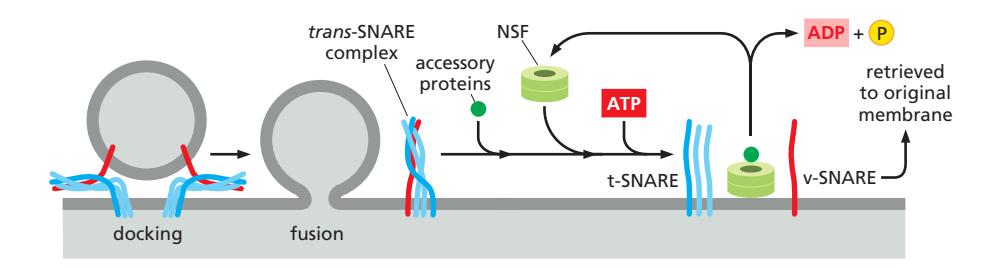
SNARE의 특징
Distribution:
- Animal cell에 최소 35개의 다른 SNARE
- 각 SNARE는 secretory 또는 endocytic pathway의 특정 organelle과 연관
Classification:
- v-SNARE: 주로 vesicle membrane에 위치
- t-SNARE: 주로 target membrane에 위치
SNARE Complex 형성
구조:
- v-SNARE는 single polypeptide chain
- t-SNARE는 보통 3개의 protein으로 구성
- 각각 characteristic helical domain 보유
Interaction:
- 초기 상태: Helical domain이 mostly unstructured
- 상호작용: v-SNARE의 helix가 t-SNARE의 helix와 interaction
- Zippering: Four-helix bundle (trans-SNARE complex) 형성
- 결과: 매우 안정한 구조 형성
Membrane Fusion Process
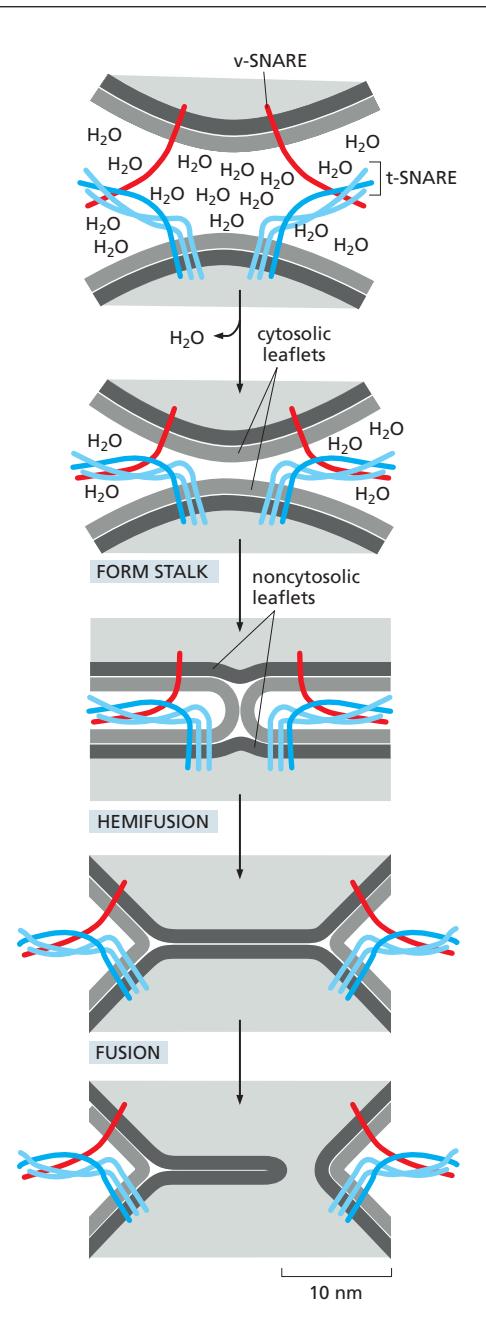
단계별 과정
-
Membrane Apposition:
- Trans-SNARE complex 형성
- 두 membrane이 tight하게 lock
- Membrane face가 매우 근접
-
Stalk Formation:
- SNARE pairing의 extreme stability가 energy 제공
- Water molecule이 interface에서 squeeze out
- Interacting cytosolic leaflet의 lipid molecule이 두 membrane 사이를 flow
- Connecting stalk 형성
-
Hemifusion:
- Noncytosolic leaflet의 lipid contact
- New bilayer 형성 (hemifusion 또는 half-fusion)
- Fusion zone 확장
-
Complete Fusion:
- New bilayer rupture
- Complete fusion reaction
- Content mixing
Energy Source
- Trans-SNARE complex assembly가 energetically favorable
- Unstructured helix → highly stable four-helix bundle
- 이 energy가 membrane apposition과 fusion drive
SNARE Specificity
SNARE pairing은 highly specific:
Biochemical Assay
- Liposome에 v-SNARE와 complementary t-SNARE 혼합
- 올바른 SNARE pair만 membrane fusion 유도
- 서로 다른 SNARE combination은 fusion 실패
Functional Significance
- 특정 vesicle이 특정 target membrane과만 fuse
- Vesicle transport의 specificity layer 추가
- Rab protein과 함께 작동하여 높은 정확도 달성
Trans-SNARE Complex Disassembly
Fusion 후 SNARE는 재사용을 위해 분리되어야 함:
NSF의 역할
NSF (N-ethylmaleimide-sensitive fusion protein):
- Hexameric ATPase (AAA-protein family)
- Membrane과 cytosol 사이를 cycle
- Trans-SNARE complex disassembly 촉진
Mechanism:
- NSF가 trans-SNARE complex에 결합
- Accessory protein 도움
- ATP hydrolysis
- Helical domain간의 intimate interaction unravel
- SNARE protein 분리
Energy Recycling
- SNARE-mediated fusion의 energy는 궁극적으로 NSF의 ATP hydrolysis에서 유래
- SNARE pair를 apart하는 데 ATP 소비
- 분리된 SNARE는 다시 assembly하며 fusion drive
- Cycle 반복
v-SNARE Retrieval
Fusion 후 destination compartment에서:
- v-SNARE는 selective retrieval pathway로 return
- 원래 compartment로 되돌아가 재사용
- Newly formed transport vesicle에 재포장
이는 각 compartment의 identity 유지에 critical함.
Homotypic vs Heterotypic Fusion
Heterotypic Fusion
대부분의 경우:
- 서로 다른 compartment의 membrane fusion
- v-SNARE (vesicle)와 t-SNARE (target) pairing
Homotypic Fusion
일부 경우:
- 같은 종류의 membrane끼리 fusion
- 양쪽 membrane에 v-SNARE와 t-SNARE 모두 존재
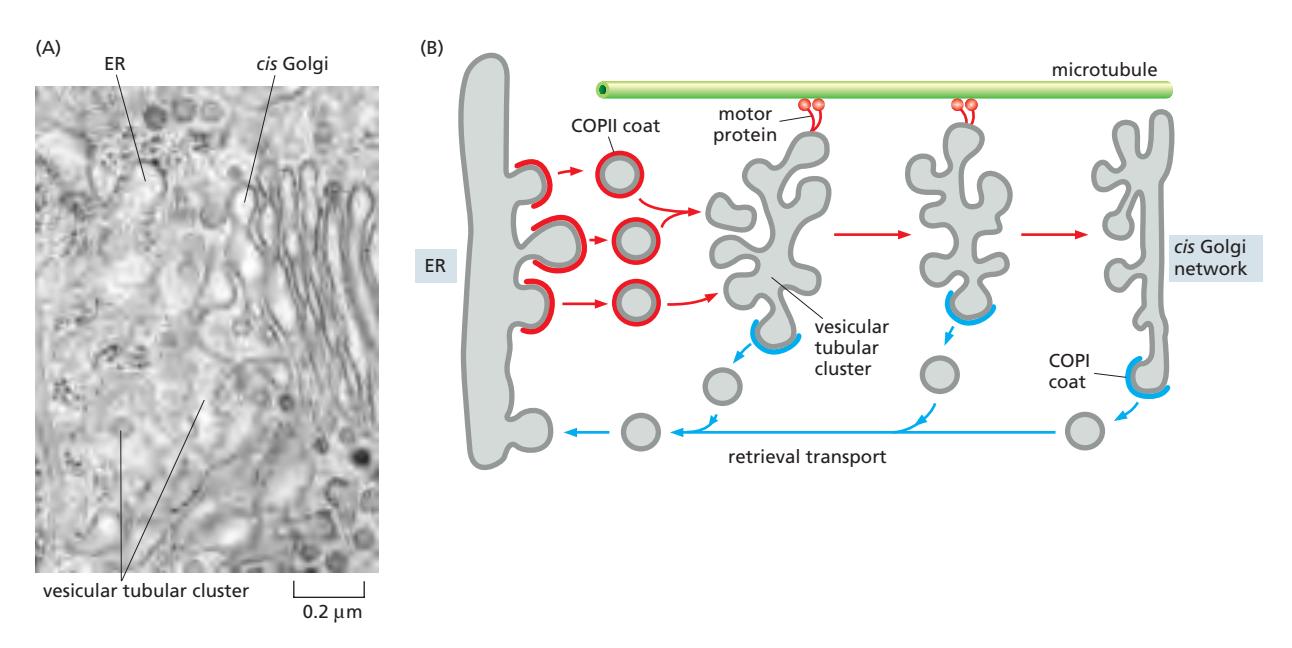
예시:
- ER-derived vesicle끼리 fusion하여 vesicular tubular cluster 형성
- Endosome끼리 fusion하여 larger endosome 형성
Mechanism:
- NSF가 양쪽 membrane의 identical SNARE pair 분리
- 분리된 matching SNARE가 adjacent membrane의 것과 interact
- Membrane fusion → continuous compartment 형성
- Homotypic fusion으로 compartment 성장
Regulated vs Spontaneous Fusion
Spontaneous Fusion
대부분의 constitutive vesicle transport:
- SNARE interaction만으로 충분
- Vesicle이 target에 도착하면 즉시 fusion
Regulated Fusion
일부 specialized case:
- SNARE zippering의 마지막 부분이 delayed
- Specific extracellular signal까지 fusion 지연
- 예: Regulated exocytosis