homotypic fusion vs heterotypic fusion
개요
Membrane fusion은 두 가지 category로 분류된다: homotypic fusion과 heterotypic fusion. 이 구분은 fuse하는 membrane의 origin에 기반한다.
Heterotypic Fusion
정의
Heterotypic fusion은 서로 다른 compartment의 membrane이 fusion하는 과정이다.
특징
일반적인 vesicle transport:
- Transport vesicle이 target membrane과 fusion
- 두 membrane은 서로 다른 origin
- 예: ER vesicle이 Golgi membrane과 fusion
SNARE pairing:
- v-SNARE: Vesicle membrane
- t-SNARE: Target membrane
- Asymmetrical interaction
- Complementary SNARE set 필요
예시
- COPII vesicle → Golgi cisterna
- Secretory vesicle → Plasma membrane
- Endocytic vesicle → Early endosome
- Late endosome → Lysosome
Homotypic Fusion
정의
Homotypic fusion은 같은 compartment의 membrane끼리 fusion하는 과정이다.
특징
Symmetrical SNARE interaction:
- 양쪽 membrane에 v-SNARE와 t-SNARE 모두 존재
- Matching SNARE가 서로 interact
- Symmetrical configuration
Mechanism
-
Initial state:
- 두 identical membrane
- 각각 v-SNARE와 t-SNARE set 보유
-
NSF action:
- NSF가 양쪽 membrane의 SNARE pair 분리
- Cis-SNARE complex disassembly
-
Cross-interaction:
- 분리된 SNARE가 adjacent membrane의 것과 interact
- v-SNARE (membrane A) ↔ t-SNARE (membrane B)
- t-SNARE (membrane A) ↔ v-SNARE (membrane B)
-
Membrane fusion:
- Trans-SNARE complex 형성
- Membrane fusion
- One continuous compartment 생성
-
Further growth:
- Compartment가 같은 종류의 vesicle과 계속 fusion
- Matching SNARE display하는 vesicle만 fusion
- Compartment size 증가
예시
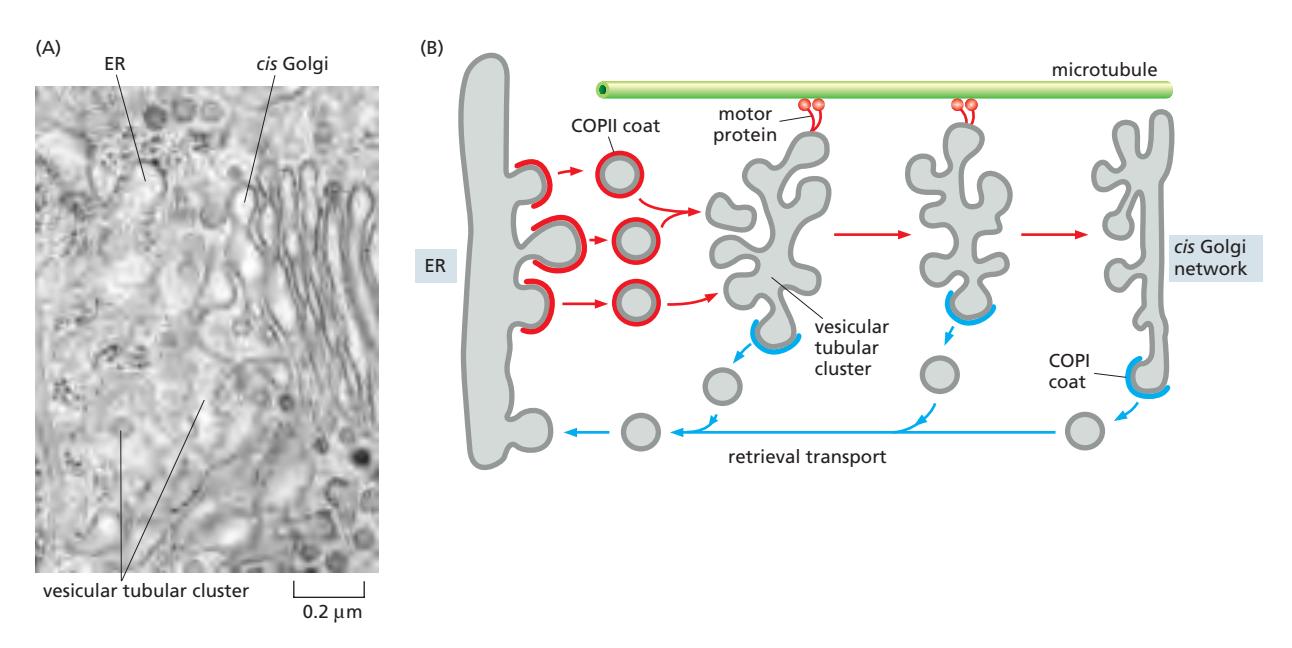
ER-derived vesicle fusion:
- Vesicular tubular cluster 형성
- Multiple COPII vesicle이 서로 fusion
- Convoluted structure 생성
Endosome fusion:
- Early endosome끼리 fusion
- Larger endosome 형성
- Homotypic fusion으로 endosome 성장
Yeast vacuole fusion:
- Mother cell의 vacuole에서 유래한 vesicle
- Bud에서 서로 fusion
- New vacuole 형성
Rab Protein의 역할
Homotypic fusion에서 Rab protein은 중요한 조절 역할:
Extent Control
- Rab protein이 homotypic fusion 정도 조절
- Compartment의 size regulation
- Appropriate compartment size 유지
Example: Yeast Vacuole
Yeast cell이 bud 형성 시:
- Mother cell vacuole에서 vesicle derive
- Vesicle이 bud로 이동
- Bud에서 서로 homotypic fusion
- New vacuole 형성
필요 조건:
- v-SNARE와 t-SNARE 모두 필요
- 어느 vesicle이 어떤 SNARE 가지는지는 중요하지 않음
- Homotypic nature로 인한 symmetry
Experimental Evidence
Genetic Studies
Yeast vacuole fusion 실험:
- Strain A: Defective alkaline phosphatase (Pase)
- Strain B: Defective protease (pro-Pase → Pase conversion 불가)
- 두 strain의 vesicle fusion → active Pase 생성
SNARE deletion experiment:
- Vacuolar v-SNARE, t-SNARE, 또는 both 제거
- 다양한 combination의 vesicle fusion test
- 결과: Both v-SNARE와 t-SNARE 필요
- 어느 vesicle에 어떤 SNARE 있는지는 무관
Implications
- Homotypic fusion도 SNARE 필요
- 하지만 distribution이 asymmetric할 필요 없음
- Functional redundancy
Functional Significance
Compartment Growth
- Homotypic fusion으로 compartment 성장
- Multiple small vesicle → larger organelle
- Efficient organelle assembly
Organelle Maintenance
- Continuous fusion과 fission cycle
- Dynamic equilibrium
- Organelle size와 number 조절
Selective Fusion
- Matching SNARE set만 fusion
- Compartment identity 유지
- Inappropriate fusion 방지