Vesicular tubular cluster
개요
Vesicular tubular cluster는 ER-derived transport vesicle이 서로 fusion하여 형성하는 intermediate compartment이다. 이들은 ER과 Golgi apparatus_MOC 사이의 transport container로 기능한다.
형성 과정
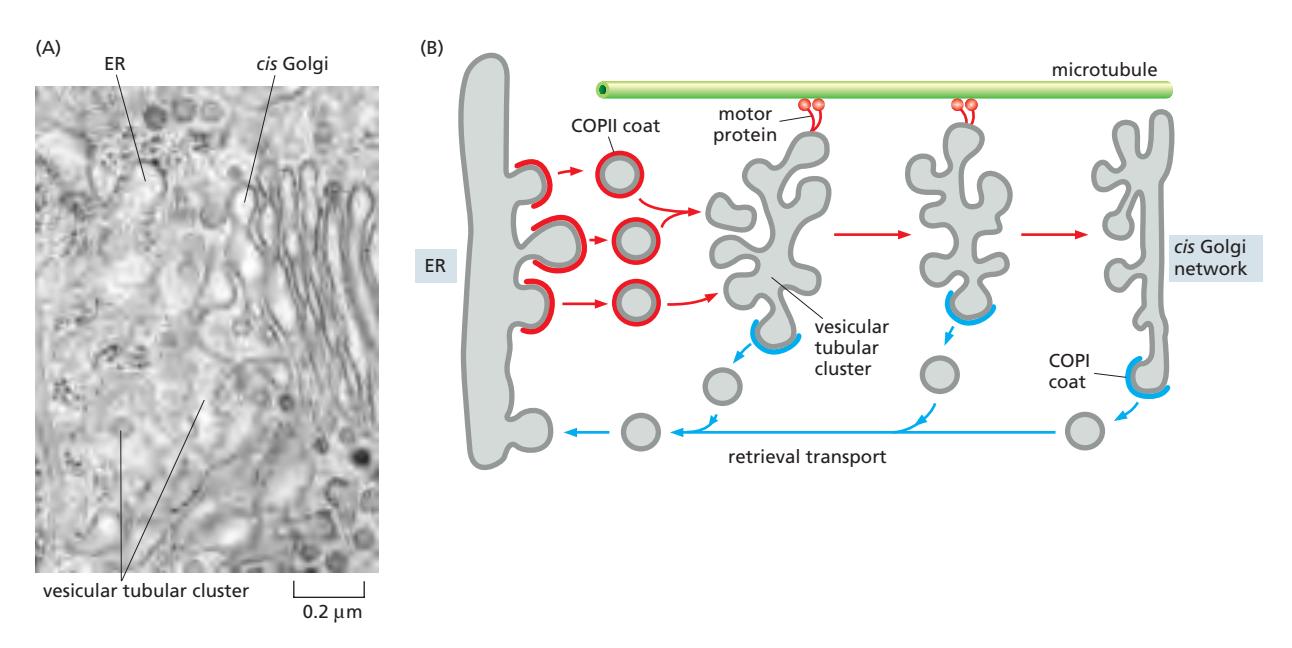
1. COPII Vesicle Budding
ER exit site에서:
- Protein cargo가 COPII-coated vesicle에 package
- Multiple vesicle이 동시에 형성
- Rapid budding
2. Coat Shedding
Vesicle이 ER에서 분리된 직후:
- COPII coat rapidly disassemble
- Naked vesicle 생성
- Fusion-competent state
3. Homotypic Fusion
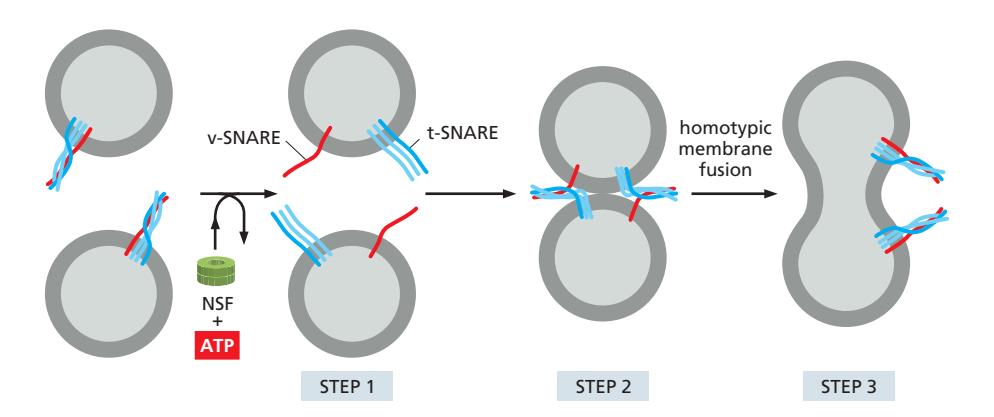
- ER-derived vesicle끼리 fusion
- Matching SNARE set 사용:
- 양쪽 membrane에 v-SNARE와 t-SNARE 모두 존재
- Symmetrical interaction
- Multiple vesicle의 successive fusion
4. Cluster Formation
Fusion의 결과:
- Convoluted structure 형성
- Interconnected tubular and vesicular elements
- Electron microscope에서 distinctive appearance
구조적 특징

Tubular Domain
- 대부분의 membrane surface area 차지
- Narrow, elongated tubule
- High surface-to-volume ratio
Vacuolar Domain
- 대부분의 volume 차지
- Dilated region
- Cargo-rich lumen
Convoluted Appearance
- Electron microscopy에서 복잡한 형태
- Cross-section이 vesicle-like structure로 보임
- 실제로는 interconnected tubule의 단면
Compartment Identity
Vesicular tubular cluster는 ER과 distinct한 compartment:
ER과의 차이
- Protein composition:
- ER에서 기능하는 많은 protein 부재
- 일부 ER resident protein이 escape하여 포함될 수 있음
- Lipid composition: ER과 다를 수 있음
- pH: ER과 약간 다를 수 있음
특성
- Transient compartment: Continuously generated and consumed
- Transport container: ER에서 Golgi로 material 운반
- Sorting station: Protein sorting 시작
기능
1. ER to Golgi Transport
Primary function:
- ER에서 Golgi로 cargo delivery
- Transport container로 작용
- Microtubule을 따라 Golgi로 이동
Movement:
- Motor protein에 의해 propelled
- Microtubule track 이용
- Directional transport to Golgi
2. Initial Sorting
Retrieval initiation:
- COPI-coated vesicle이 cluster에서 budding 시작
- Escaped ER resident protein return
- Recycling machinery component return
3. Maturation Platform
Progressive change:
- Cluster가 Golgi로 이동하면서 maturation
- Tubular domain이 점차 감소 (ER로 recycling)
- Vacuolar domain modification
- Composition 지속적 변화
COPI-coated Vesicle Budding

Timing
Vesicular tubular cluster 형성 직후:
- COPII coat shed된 지 수 초 후
- COPI coat assembly 시작
- Rapid switch in coat type
Function
COPI-coated vesicle은 retrieval pathway 매개:
Cargo:
- Escaped ER resident protein:
- KDEL sequence 또는 KKXX sequence 보유
- ER로 return
- Cargo receptor: ER exit에 사용된 receptor recycling
- SNARE protein: Vesicle formation과 fusion에 사용된 SNARE
Coatomer
COPI-coated vesicle의 특징:
- Inner와 outer coat component가 coatomer preassembled complex로 recruit
- 한 번에 전체 coat recruit
- COPII나 clathrin과 다른 방식
Lifecycle
1. Formation
- ER exit site 근처에서 생성
- Homotypic fusion으로 성장
- 약 10분간 incoming vesicle 수용
2. Maturation
- COPI vesicle budding으로 retrieval 시작
- Tubular domain 감소
- Protein composition 변화
3. Movement
- Microtubule을 따라 Golgi로 이동
- Cell periphery → nucleus 근처
4. Golgi Fusion
- Golgi cisterna (cis Golgi network)와 fusion
- Cargo delivery
- Cluster structure disappear
Continuous Cycle
Vesicular tubular cluster system:
- Continually generated: ER에서 새로운 vesicle 지속적 공급
- Continually consumed: Golgi로 이동하여 fusion
- Steady-state: Generation과 consumption balance
- Dynamic equilibrium: Constant flux 유지