Bond Energy
화학결합과 에너지
원자들이 결합을 형성할 때 에너지가 방출되고, 결합이 끊어질 때 에너지가 필요하다.
- Bond energy (결합 에너지): 특정 결합을 끊는 데 필요한 에너지 (kJ/mol)
- 결합이 형성될 때: 에너지 방출 (발열)
- 결합이 끊어질 때: 에너지 흡수 (흡열)
고에너지 결합
생물학적으로 중요한 고에너지 결합 (high-energy bonds):
| 결합 종류 | 예시 | ΔG° (가수분해) |
|---|---|---|
| Phosphoanhydride bond | ATP → ADP + Pi | −30.5 kJ/mol |
| Thioester bond | Acetyl CoA | ~−31 kJ/mol |
| Acyl phosphate | 1,3-bisphosphoglycerate | ~−49 kJ/mol |
NADH와 결합 에너지
NADH는 두 전자를 covalent bond 형태로 저장한다:
- NADH에서 전자를 O₂로 전달하는 반응의 ΔG° = −218 kJ/mol (NADH 한 분자당)
- 이 에너지가 Electron Transport Chain에서 단계적으로 방출된다.
“If hydrogen were simply burned, nearly all of the energy would be released in the form of heat. In biological oxidation, about half of the released energy is stored in a form useful to the cell by means of the electron-transport chain.” — Chapter 14
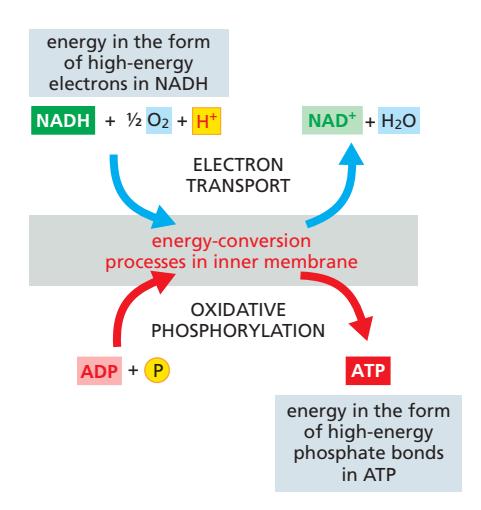 Figure 14-13: 수소의 연소(A)와 생물학적 산화(B) 비교. 단계적 전자 전달로 에너지를 보존.