Complex V — ATP Synthase
개요
ATP synthase (Complex V, F₁F₀ ATP synthase, F-type ATPase)는 미토콘드리아 inner membrane에 내장된 **회전형 분자 기계(nanomachine)**로, electrochemical proton gradient의 에너지를 이용해 ADP + Pᵢ → ATP를 합성한다.1
- 위치: 미토콘드리아 crista membrane (matrix 쪽으로 F₁ head가 돌출)
- 구성: ~23개 이상 단백질 소단위, 총 ~600,000 dalton
- 회전 속도: ~8,000 RPM → 회전당 3 ATP, 즉 ~400 ATP/second
- 양방향 작동 가능: 정방향(ATP 합성) / 역방향(ATP 가수분해 → proton pumping)
구조
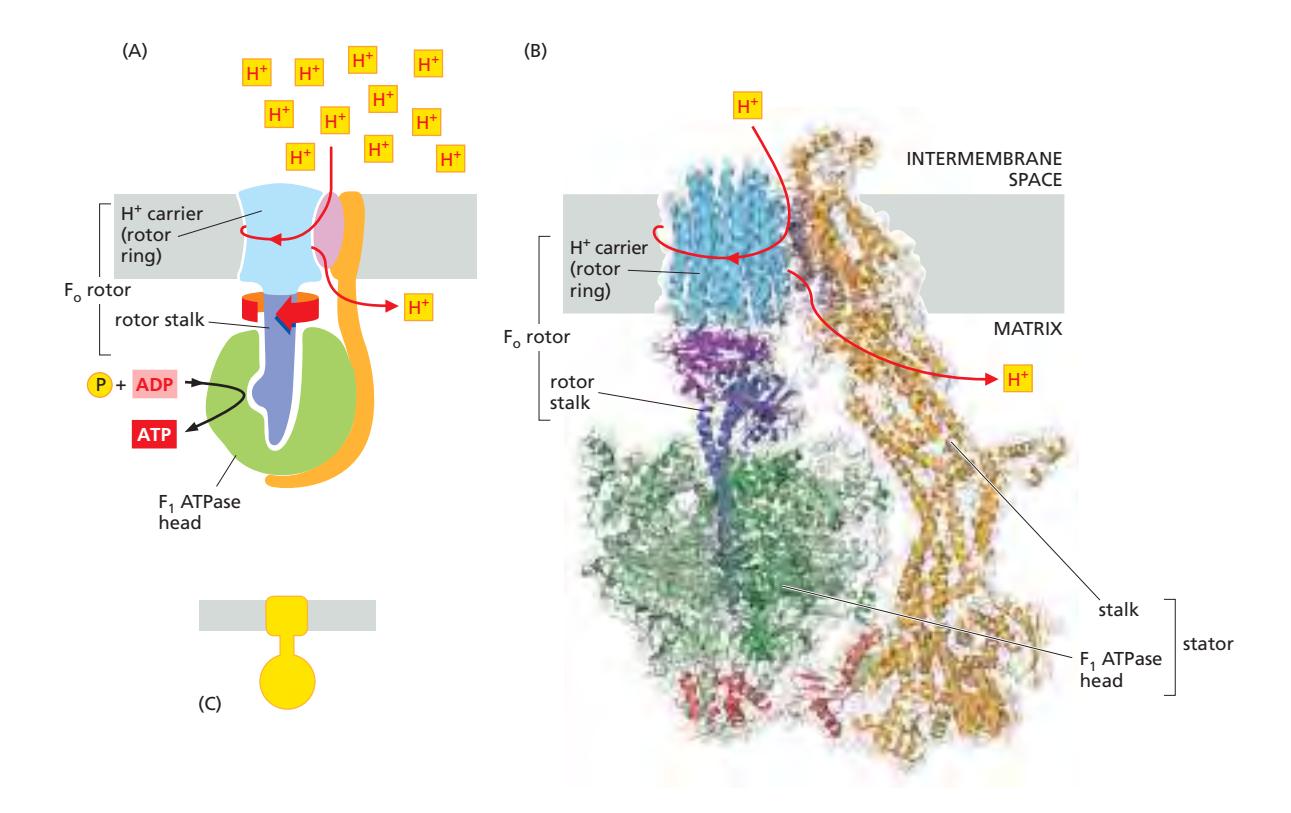 Figure 14-31: F₁F₀ ATP synthase 구조. F₀ 막 부분(rotor ring, a subunit)과 F₁ 촉매 head, stator stalk, rotor stalk로 구성.
두 주요 부분
| 부분 | 위치 | 구성 | 역할 |
|---|---|---|---|
| F₀ | 막 내 | c subunit ring (rotor) + a subunit (stator) | Proton 통로, 회전 발생 |
| F₁ | Matrix 쪽 돌출 | 3α + 3β + γ (rotor stalk) + δ + ε | ATP 합성 촉매 |
Rotor (회전부)
- c subunit ring: F₀에 위치. 각 c subunit은 2개의 막관통 α-helix가 헤어핀 형태. 가운데 glutamate/aspartate가 proton 결합 부위
- γ subunit (rotor stalk): c ring에 연결되어 F₁ head 내부에서 회전하는 축
Stator (고정부)
- 3α + 3β: 교대로 배열되어 catalytic head 형성. β subunit 3개에 각각 catalytic nucleotide-binding site
- Peripheral stalk (stator stalk): head를 고정하여 함께 돌지 않도록 함
작동 메커니즘: Rotary Catalysis
Proton 경로
- Crista space의 H⁺가 a subunit의 첫 번째 half-channel을 통해 c subunit의 결합부위에 결합
- H⁺를 실은 c subunit이 ring을 따라 한 바퀴 회전
- a subunit의 양전하 arginine이 H⁺를 밀어내 두 번째 half-channel을 통해 matrix로 방출
- 이 directional proton flow가 rotor ring을 turbine처럼 회전시킴
ATP 합성 (Binding Change Mechanism)
- γ subunit(rotor stalk)가 F₁ head 안에서 camshaft처럼 회전
- 3개의 β subunit이 순서대로 conformational change 유발:
- 개방형: ADP + Pᵢ 결합
- 폐쇄형: ADP + Pᵢ → ATP 형성 (high affinity)
- 방출형: ATP 방출 (low affinity)
- 1회전 = 3 ATP 합성
ATP당 필요한 proton 수
= (c subunit 수) / 3
| 생물체 | c subunit 수 | ATP당 H⁺ |
|---|---|---|
| 포유류 미토콘드리아 | 8 | ~2.7 |
| 효모 미토콘드리아 | 10 | ~3.3 |
| 세균/고세균 | 11–13 | ~3.7–4.3 |
| 식물 엽록체 | 14 | ~4.7 |
| 일부 남세균 | 15 | ~5 |
→ 포유류 미토콘드리아는 high gear (적은 c subunit → proton 절약) : 상대적으로 낮은 proton 공급에 최적화
Cristae에서의 배열
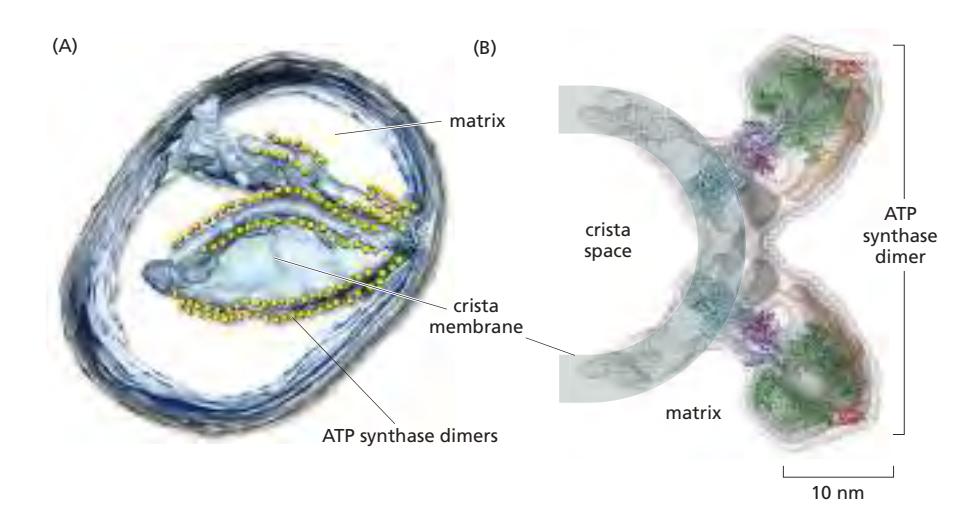 Figure 14-33: Cristae ridge를 따라 dimers row를 형성하는 ATP synthase.
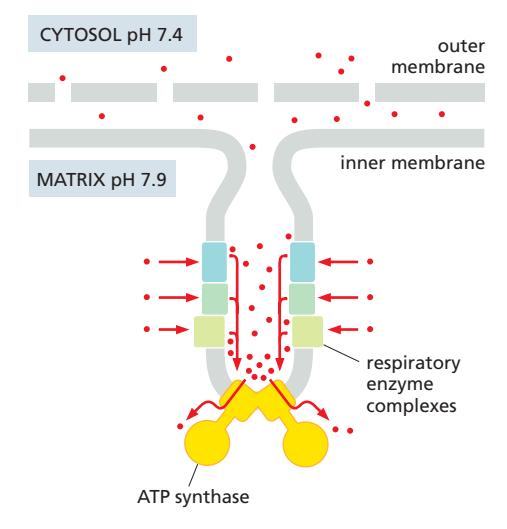 Figure 14-34: Cristae ridge의 ATP synthase dimer rows가 proton “sink”를 형성하여 효율적 ATP 생산에 기여.
- ATP synthase는 cristae ridge를 따라 dimer rows 형성
- Dimer rows가 고곡률 막 구조(cristae)를 유도·안정화
- Proton pump들이 pumping한 H⁺는 crista space에 농축 → ATP synthase dimer row로 신속 확산 (proton sink 효과)
- Cristae 구조가 없으면 cellular respiration 절반 감소
역방향 작동 (ATP 가수분해 → Proton pumping)
- ATP가 부족하거나 proton gradient 유지가 필요한 상황에서 역방향 작동
- 무산소 대사하는 세균에서 ATP hydrolysis를 통해 plasma membrane에 proton gradient 유지 → 영양소 수송, 편모 회전 등에 사용
- [[Cell Biology/내용/13. Intracellular Membrane Traffic/Lysosome/Lysosome_MOC|V-type ATPase]] (세포 소기관 산성화)도 유사한 구조이며 항상 ATP 가수분해 방향으로 작동
관련 노트
- ATP synthesis — ATP 합성의 에너지론과 세포에서의 의미
- Chemiosmotic coupling — Proton gradient와 ATP synthesis 연계
Footnotes
-
2023 기말 8번 — ATP synthase(Complex V)가 IMS→matrix H⁺ 농도차를 이용해 ATP를 합성한다는 선지 ⑤가 옳다고 확인됨. ↩