Endosomes Maturation
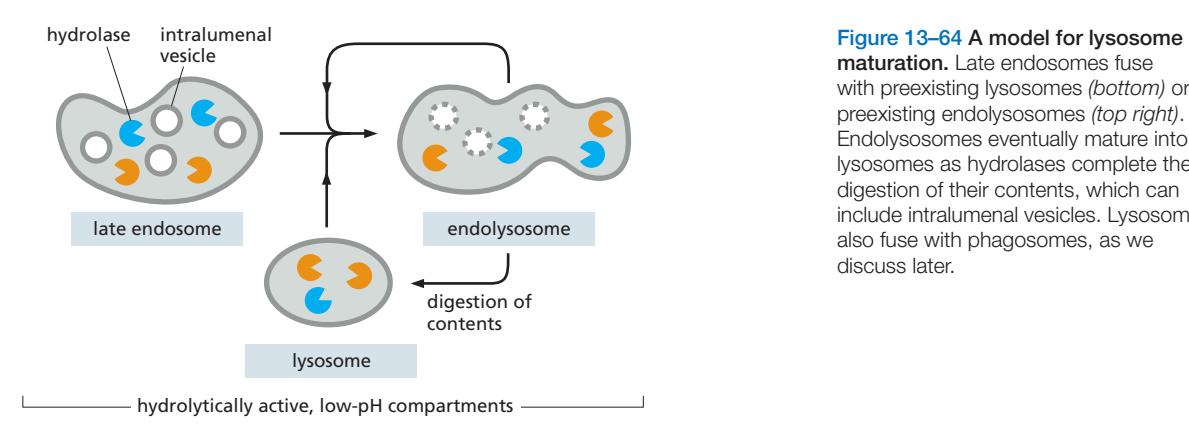
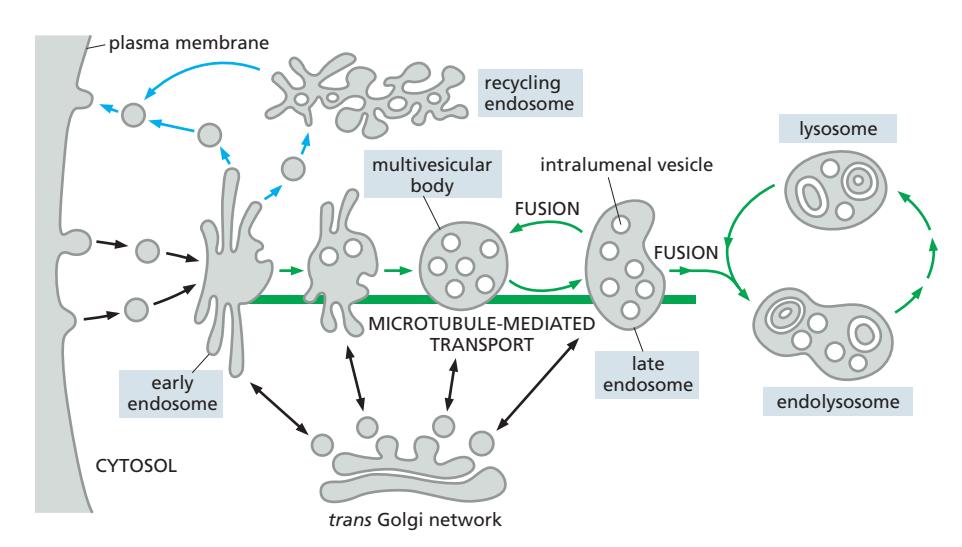
Endosome maturation은 early endosome이 시간이 지남에 따라 late endosome으로 변화하는 과정이다.1
- early endosome부터 late endosome으로 성숙해가며 계속 TGN으로부터 lysosomal hydrolase와 H+pump를 전달받음.
- late endosome은 intralumenal vesicle과 hydrolase를 보유하고 있는 상태. 여기에 lysosome의 융합 혹은 pH의 계속된 하락이 가수분해를 촉진한다. 가수분해가 완료된 endolysosome은 비로소 lysosome이 되며 다른 endosome과의 융합을 기다린다.
- lysosome은 late endosome과 융합, endolysosome이 되고 분해가 끝나면 lysosome이 되는 cycle이 형성된다.
- 따라서 lysosome과 late lysosome은 명확히 구분하기 어렵고 연속적인 변화 과정이라고 봐도 무방하다. 그리고 이에따라 형태적으로 heterogenous하다.
- 내부 물질이 분해 되고 말고는 pH차이
Early Endosome의 형성
Early endosome은 주로 들어오는 endocytic vesicle이 서로 융합하여 파생된다:
- 일반적으로 early endosome은 late endosome으로 maturation을 시작하기 전에 약 10분 동안 들어오는 vesicle을 받음
구조
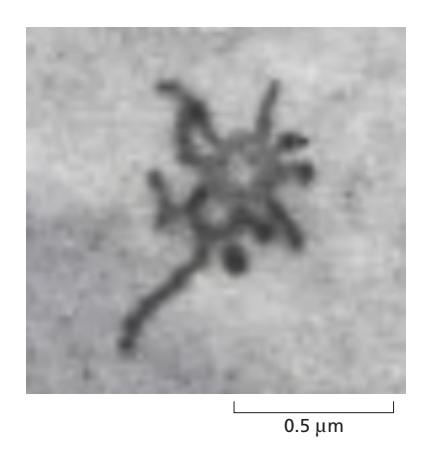 위는 early endosome
Early endosome은 tubular와 vacuolar domain을 가진다:
위는 early endosome
Early endosome은 tubular와 vacuolar domain을 가진다:
- 대부분의 막 표면은 tubule에 있음
- 대부분의 부피는 vacuolar domain에 있음
Maturation 과정의 변화
1. 형태와 위치 변화
- Tubular domain이 대부분 plasma membrane으로 재활용됨
- Vacuolar domain이 철저하게 수정됨
- Endosome이 microtubule을 따라 dynein motor에 의해 핵 쪽으로 이동
2. Rab 단백질 주도 변화
Rab 단백질이 다음의 변화를 주도한다:
- Endosome 막의 cytosolic face에서 phosphoinositide lipid의 변화
- Fusion machinery (SNARE와 tether) 변화
- Organelle의 기능적 특성 변화
3. Lysosome 단백질 전달
Lysosome 단백질이 TGN에서 성숙하는 endosome으로 전달된다:
- Lumenal hydrolase
- Membrane-embedded V-type ATPase
4. Acidification
V-type ATPase가 세포질에서 endosome lumen으로 H+를 펌핑하여:
- Organelle을 더욱 acidify함
- Maturation에 수반되는 산도 증가는 lysosomal hydrolase를 점점 더 활성화시킴
- 많은 receptor-ligand 상호작용에 영향을 미쳐 receptor loading과 unloading을 제어
5. Intralumenal Vesicle 형성
Endocytosed signaling receptor가 endosome 내부의 intralumenal vesicle로 격리되어:
- Receptor signaling 활성을 정지시킴
Rab Cascades
Rab5에서 Rab7으로의 전환
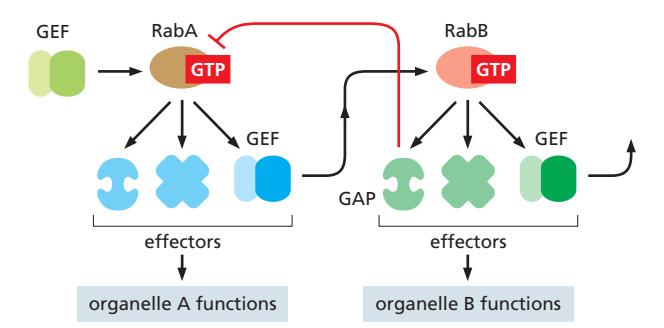
시간이 지남에 따라, Rab5-associated membrane patch가 Rab7-associated membrane patch로 대체된다:
- Early endosome (Rab5로 표시됨)이 late endosome (Rab7으로 표시됨)으로 전환
- Rab7에 의해 recruit되는 Rab effector 세트는 Rab5에 의해 recruit되는 것과 다름
결과:
- Incoming과 outgoing traffic을 포함한 구획 재프로그래밍
- Organelle을 plasma membrane에서 멀어져 세포 내부로 위치 이동
일방향성
Rab-associated membrane patch의 자기 증폭 특성은:
- Endosome maturation 과정을 일방향적이고 비가역적으로 만듦
Cargo의 운명
Early endosome에서 재활용되지 않은 모든 cargo:
- 이제 late endosome의 일부가 됨
Late Endosome의 특징
Multivesicular Body
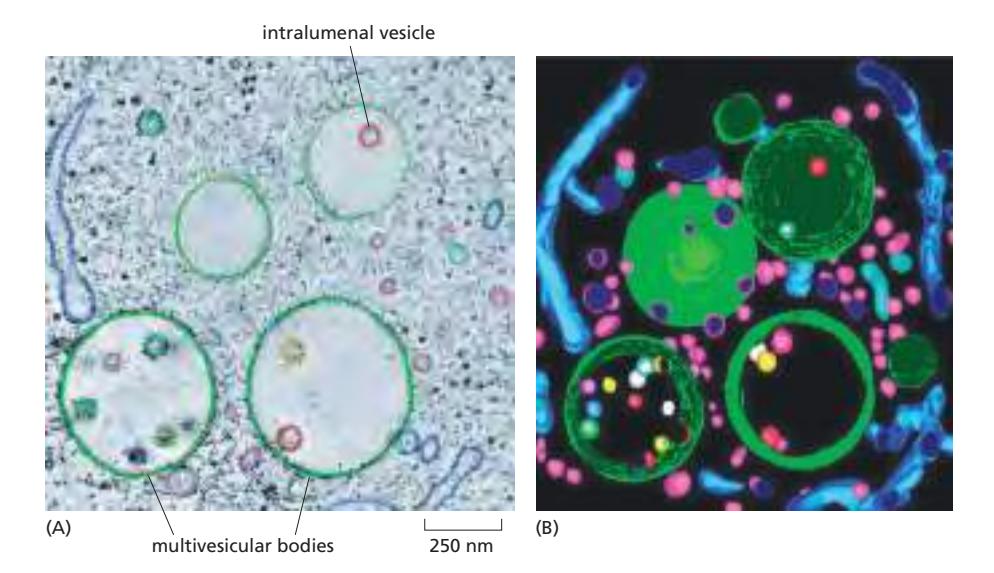
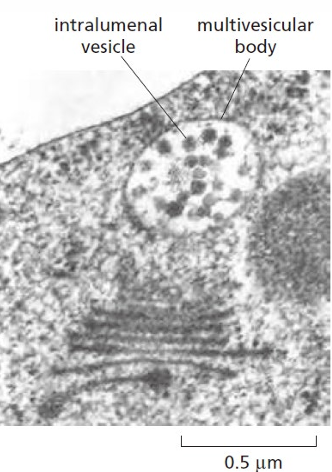 Endosome이 성숙함에 따라:
- 막의 patch가 endosome lumen으로 invaginate
- Pinch off하여 intralumenal vesicle 형성. exosome이라고도 불림
- 이는 세포간 신호로 작용하거나, 약물의 pathway에 쓰이기도 함
- receptor의 cytosolic face의 signal을 차단하기 위함.
- 이러한 성숙하는 endosome은 multivesicular body라고도 불림
- 이는 ESCRT Protein Complex에 의해 생성됨.
재활용 중단
Late endosome은:
- Plasma membrane으로 물질을 재활용하는 것을 중단
- 대신 서로 융합하고 endolysosome 및 lysosome과 융합하여 내용물을 분해
TGN과의 연결
각 endosome maturation 단계는 TGN과 transport vesicle을 통해 연결된다:
- 새로 합성된 lysosomal 단백질의 지속적인 공급 제공
- M6P receptor와 같은 구성요소의 회수
pH의 역할
| 구획 | pH | 효과 |
|---|---|---|
| Early endosome | ~6.0 | Ligand 방출, proenzyme 활성 낮음 |
| Late endosome | ~5.5 | Hydrolase 활성 증가 |
| Lysosome | ~4.5-5.0 | 최적 hydrolase 활성 |
pH가 점진적으로 낮아지면서:
- Ligand-receptor 상호작용 조절
- Enzyme 활성화 제어
- 분해 효율 증가
Retrieval Pathway
Early Endosome에서
Transport vesicle이 early endosome의 tubular extension에서 bud off:
- 선택된 막 단백질을 회수
- Plasma membrane으로 직접 또는 recycling endosome을 거쳐 반환
Recycling Endosome
Recycling endosome은:
- Early endosome과 plasma membrane 사이의 중간 역할
- 필요할 때까지 특정 plasma membrane 단백질을 저장할 수 있음 예시:
- Glucose transporter (지방 세포와 근육 세포에서)
- Insulin 신호에 반응하여 plasma membrane으로 이동
Late Endosome에서
일부 retrieval pathway는 late endosome에서도 작동한다:
- Retromer-coated vesicle
- TGN으로 특정 단백질 반환
- 예: M6P receptor
Maturation의 점진성
대부분의 이러한 이벤트는 점진적으로 발생하지만:
- 결국 endosome의 완전한 변형으로 이어짐
- Early endolysosome으로 전환
Lysosome 유지보수
Maturation 과정은 lysosome 유지보수에 중요하다:
- TGN에서 성숙하는 endosome으로 lysosome 구성요소의 지속적인 전달
- 새로운 lysosome 단백질의 꾸준한 공급 보장
관련 주제
Footnotes
-
2022 중간 34번 — Endosome maturation 과정(Rab5→Rab7 전환, pH 변화, MVB 형성, ESCRT 기계)이 정답 근거로 활용됨. ↩