Centrosome

Centrosome은 동물 세포에서 가장 중요한 **MTOC (microtubule-organizing center)**로, 핵 옆 세포질에 위치한다.

Fig 16–42. (A) 핵 옆에 위치한 centrosome 구조. (B) Microtubule이 부착된 centrosome — minus end는 centrosome에, plus end는 세포질 쪽으로 뻗는다. (C) C. elegans MTOC에서 방사상으로 뻗은 microtubule thicket.

  • Minus end를 고정하고 plus end를 세포 바깥쪽으로 향하게 하여 microtubule을 nucleate
  • 세포 내 organelle 배치의 전체적인 좌표계 제공
  • 두 가지 주요 구성 요소: Centriole + Pericentriolar material (PCM)

Centriole

Fig 16–43. (A) Mother centriole(distal appendage 포함)과 daughter centriole 단면. (B) Protozoan centriole 단면: 9세트 microtubule triplet. (C) Triplet 구성(A, B, C microtubule). (D) SAS-6 단백질이 만드는 cartwheel의 9중 대칭.

구조

  • Centrosome 내부에 L자형으로 배치된 한 쌍이 존재
  • 각 centriole: 9세트의 microtubule triplet이 원통형으로 배열 → 9중 대칭
  • 각 triplet: 완전한 A microtubule + 불완전한 B, C microtubule이 융합
  • SAS-6 단백질 9개가 coiled-coil dimer를 이루어 cartwheel ring 형성 → 9중 대칭의 기원

Mother vs. Daughter Centriole

MotherDaughter
형성 시기이전 세포주기현재 S phase
구조적 특징Distal appendage 보유Appendage 없음
주요 기능Primary cilia의 basal body분열 후 새로운 mother가 됨

Pericentriolar Material (PCM)

  • Centriole 주변을 감싸는 섬유성 단백질의 무정형 망상 구조
  • Biomolecular condensation으로 형성되는 dense spherical matrix
  • γ-TuRC가 여기에 묻혀 microtubule nucleation이 일어남
  • 분리된 minus end의 안정화 및 고정은 CAMSA proteins (vertebrate)가 담당
    • Minus end를 depolymerization으로부터 보호
    • Golgi apparatus, 세포 cortex 등 세포 구조물에 고정

γ-Tubulin Ring Complex (γ-TuRC)

Fig 16–41. (A) γ-TuSC: γ-tubulin 2개 + accessory protein 쌍. (B) 7개의 γ-TuSC가 나선형으로 모여 13개의 γ-tubulin이 원형으로 노출. (C) γ-TuRC가 microtubule minus end를 nucleate하는 모델.

조립 과정

γ-tubulin 2개 + accessory protein 쌍 → γ-TuSC → 7개의 γ-TuSC가 나선형으로 조립 → 13개의 γ-tubulin이 원형으로 노출 → microtubule의 13 protofilament와 일치하는 주형 제공 → minus end nucleation

나선형 배열로 인해 두 protofilament 사이에 longitudinal seam이 하나 생긴다.

Centrosome에서의 γ-TuRC

  • Centrosome은 보통 50개 이상의 γ-TuRC 모집
  • 그러나 동물 세포에는 수백 개의 microtubule이 존재 → 모두를 centrosome에 고정 불가
  • γ-TuRC는 세포질에도 풍부하게 분포
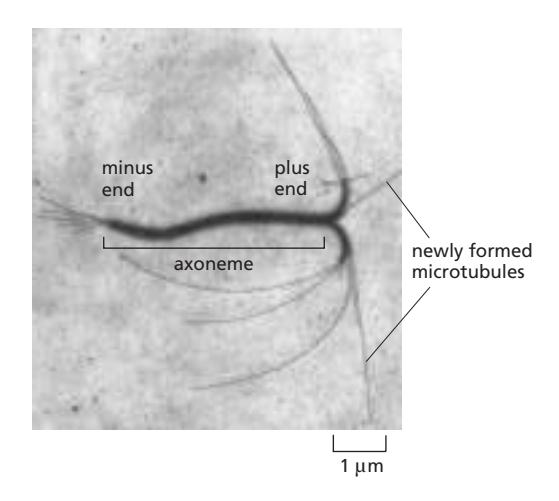
  • Centrosome은 microtubule nucleation에 절대적으로 필요하지 않음 — 레이저로 centrosome을 파괴해도 다른 부위에서 nucleation이 일어난다

Centrosome 복제와 세포 분열

  1. S phase: 각 centriole 옆에 새로운 딸 centriole 형성 → centrosome 복제
  2. Mitosis 시작: 두 centrosome이 분리 → mitotic spindle의 양극 형성
  3. 분열 완료: 각 딸세포가 centrosome 하나씩 보유 (centriole 쌍 포함)

Primary Cilia의 Basal Body

Fig 16–61. (A) Mouse neuron primary cilium의 basal body. (B) Centriole의 기능 전환 — interphase: primary cilium basal body / 분열기: mitotic spindle centrosome.

Interphase에서 mother centriole은 세포막 근처로 이동하여 primary cilium의 basal body로 기능한다.

세포 주기에 따른 전환

시기Centriole 기능
Interphase세포막 근처로 이동 → primary cilium 형성
S phasePrimary cilium 흡수 → centriole 복제
Mitosis두 centrosome → spindle 양극 형성

IFT (Intraflagellar Transport)

  • Primary cilium 내에서 단백질 합성이 일어나지 않으므로 IFT가 필수
  • Anterograde: Kinesin-2 (세포체 → cilium 끝)
  • Retrograde: Cytoplasmic dynein 2 (cilium 끝 → 세포체)

세포 유형별 MTOC(microtubule organaizing center) 비교

Fig 16–44. 다양한 세포 유형에서의 microtubule 조직화.

세포 유형MTOCCentrioleMicrotubule 배열
동물 fibroblastCentrosomePlus end → 세포 주변부, 방사형 aster
출아 효모Spindle pole body (핵막 내장)
식물 세포핵막 주변 + 세포 cortexγ-TuRC 사용
상피 세포극화 후 apical surface 쪽Plus end → basal 방향 (세로 배열)
신경 세포 axon세포체 centrosomeUniform: plus end → axon terminal
신경 세포 dendrite세포체 centrosomeMixed polarity

효모와 식물은 centriole이 없어도 γ-TuRC로 microtubule을 nucleate한다. Centriole 유무와 γ-TuRC 기반 nucleation 능력은 별개이다.


관련 노트