Electron Transport Chain
개요
Electron Transport Chain (ETC, 전자전달계) = Respiratory chain은 미토콘드리아 inner membrane의 crista에 위치하며, NADH와 FADH₂의 전자를 O₂로 전달하면서 proton gradient를 형성하는 계이다.12
“The respiratory chain is embedded in the crista membrane portion of the inner mitochondrial membrane. It contains three respiratory enzyme complexes through which electrons pass on their way from NADH to O₂.” — Chapter 14
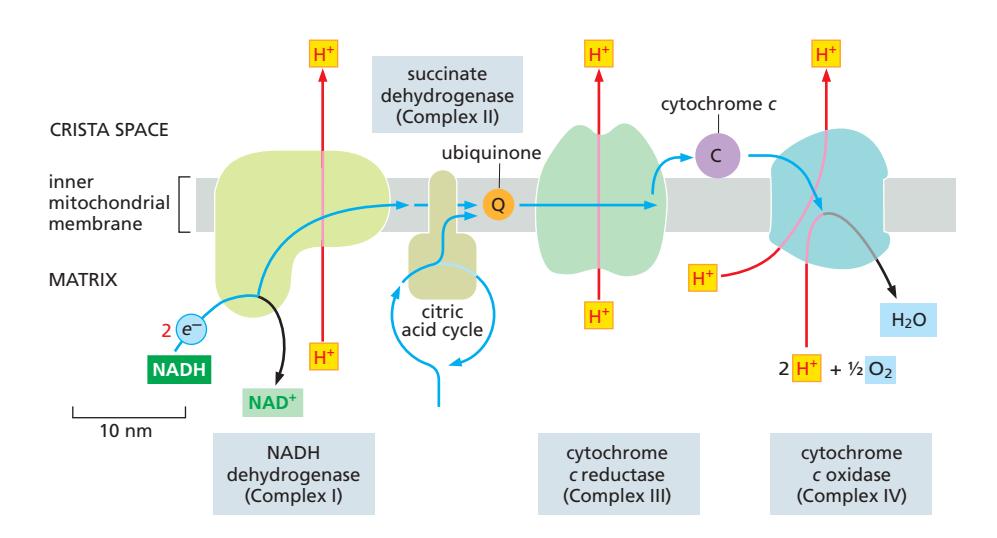 Figure 14-18: 미토콘드리아 전자전달계의 세 proton pump와 전자 경로.
구성 요소
| Complex | 이름 | 역할 | Proton pumping |
|---|---|---|---|
| Complex I | NADH dehydrogenase | NADH → ubiquinone | 4 H⁺/e⁻ |
| Complex II | Succinate dehydrogenase | Succinate → ubiquinone | 없음 |
| Complex III | Cytochrome c reductase | Ubiquinol → cytochrome c | 2 H⁺/e⁻ |
| Complex IV | Cytochrome c oxidase | Cytochrome c → O₂ | 1 H⁺/e⁻ |
| Complex V | ATP synthase | H⁺ gradient → ATP | (역방향: ATP 합성) |
전자 흐름 경로
NADH
  → Complex I
      → Ubiquinone (Q) ← Complex II (succinate에서도)
          → Complex III
              → Cytochrome c
                  → Complex IV
                      → O₂ + 4H⁺ → 2 H₂O
Mobile Electron Carriers
- Ubiquinone (Coenzyme Q, Q): 지질 이중층 내에서 자유롭게 이동. Complex I 또는 II에서 Complex III로 전자 운반
- Cytochrome c: crista space의 작은 수용성 단백질. Complex III에서 Complex IV로 전자 운반 (1개씩)1
Redox Potential과 에너지
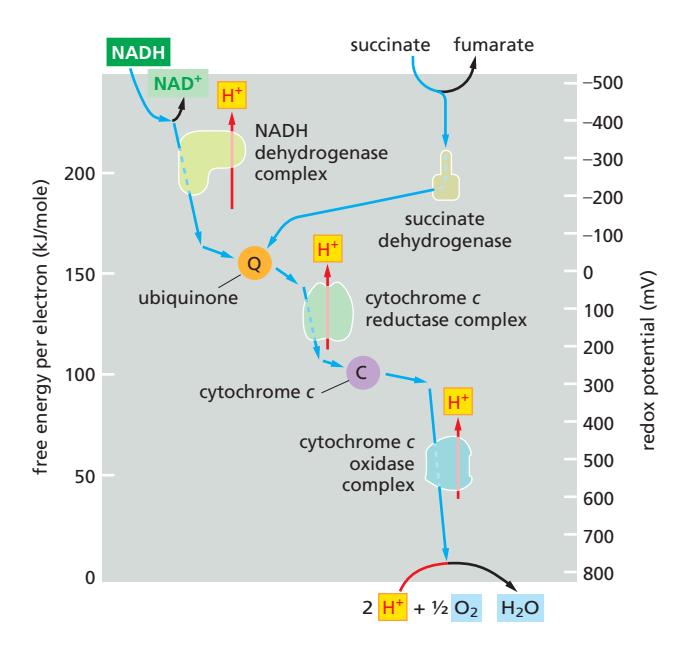 Figure 14-19: 전자전달계를 따라 증가하는 Redox potential.
- NADH (E’₀ = −320 mV) → O₂ (E’₀ = +820 mV)
- ΔE’₀ = 1140 mV → 전자 2개당 ΔG° ≈ −219 kJ/mol
- 이 에너지가 세 단계에서 proton pumping에 사용됨
Supercomplex 형성
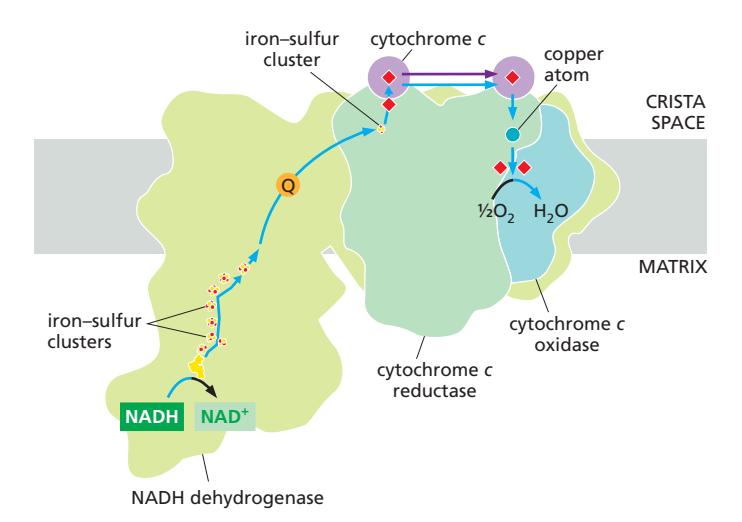 Figure 14-27: 소 심장 미토콘드리아의 respiratory-chain supercomplex.
세 proton pump (Complex I, III, IV)는 crista membrane에서 supercomplex를 형성:
- 전자 전달 효율 향상
- 위험한 redox 부반응 방지
- Cardiolipin 및 특수 단백질에 의존
내용 목차
- Chemiosmotic coupling
- Proton pumping
- Complex I (NADH dehydrogenase)
- Complex II (Succinate dehydrogenase)
- Complex III (cytochrome c reductase)
- Complex IV (cytochrome c oxidase)
- Complex V (ATP synthase)
- ATP synthesis
Footnotes
-
2023 기말 8번 — ①번: ETC는 미토콘드리아 inner membrane에 존재 → 옳음. ④번(정답): Cytochrome c는 Complex III에서 전자를 받아 Complex IV로 전달 — “Complex I·II로부터 전자를 받아 Complex III에 전달”은 틀림 → 정답. ↩ ↩2
-
2025 기말 1번 — ①번 선지: ETC는 “독립적으로” ATP를 합성하지 않음 — proton gradient(chemiosmotic coupling)를 경유해 ATP synthase가 합성함 → 선지 “세 과정 모두 독립적으로 ATP 합성”은 틀림. ↩